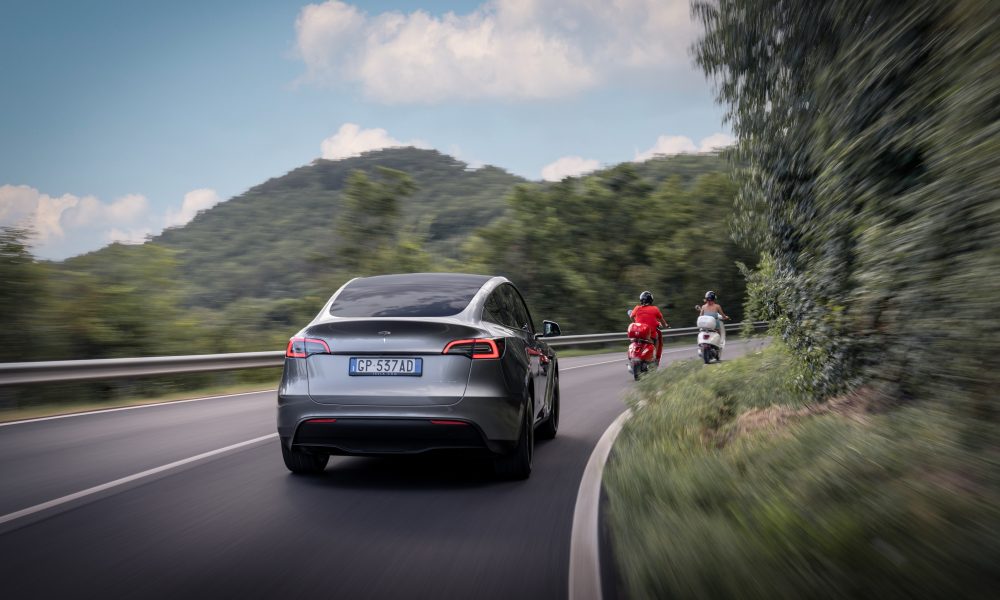
Unlocking Tesla FSD: Mastering Deep Learning for Real-World AI
The vision of fully autonomous vehicles, whisking us away while we relax or work, has captivated imaginations for decades. Today, no company is closer to making this a widespread reality than Tesla. With its Full Self-Driving (FSD) suite, Tesla isn't just building cars; it's engineering a future driven by cutting-edge artificial intelligence. But what exactly makes Tesla's approach unique, and what is the true tesla autonomous driving worth in the grand scheme of innovation and investment?
Tesla's strategy hinges on mastering deep learning for real-world scenarios, addressing challenges that go far beyond traditional automotive engineering. This isn't merely about automating a car; it's about solving one of AI's grandest challenges: replicating human-like intelligence and responsiveness in complex, unpredictable environments.
The Foundation of Autonomy: Perceive, Predict, Plan
At its core, any self-driving system must seamlessly execute three critical functions to navigate the world safely and efficiently:
- Perceive the environment: The vehicle must accurately "see" and understand its surroundings. This includes identifying other vehicles, pedestrians, cyclists, traffic lights, road signs, lane markings, and obstacles, regardless of weather or lighting conditions.
- Predict the future: Based on its perception, the system needs to anticipate the likely actions of other road users and the progression of dynamic elements in its environment. Will that pedestrian step into the road? Is the car ahead about to change lanes?
- Plan actions: With a clear understanding of the present and a reasonable prediction of the immediate future, the autonomous system must then plan a safe, legal, and efficient path forward, executing actions like accelerating, braking, steering, and signaling.
The Deep Learning Revolution in Perception
Historically, perception systems relied heavily on hand-labeled datasets – human annotators meticulously identifying objects in countless images and videos. While effective, this method is slow, expensive, and fundamentally limited in scale. Tesla, like many leading AI research groups, recognizes that the biggest leap in perception will come from mastering self-supervised learning on video.
Imagine an AI that learns to understand video by predicting missing parts of frames or future frames based on what it has already seen. This approach allows the system to train on oceanic amounts of unlabeled video data, generating its own learning signals without constant human intervention. The implications are profound: deep learning models can scale exponentially, unconstrained by the bottleneck of human labor. While hand-labeled datasets will still play a role in fine-tuning, the heavy lifting of understanding the visual world can be done on an unprecedented scale, making the AI's perception more robust and comprehensive.
From Hand-Coded Rules to Intelligent Planning
Just as perception benefits from deep learning, so too does the crucial task of action planning. Early autonomous vehicle attempts often relied on intricate, hand-coded rules – IF-THEN statements designed to cover every conceivable driving scenario. This approach inevitably fails in the face of the infinite variability of the real world.
Tesla's vision, aligning with advanced AI research, is to apply deep learning methodologies directly to planning. This involves techniques like imitation learning, where the AI learns to drive by observing expert human drivers, and deep reinforcement learning, where the AI learns optimal actions through trial and error, rewarded for good outcomes and penalized for bad ones. These methods allow the system to develop nuanced, adaptive, and creative driving strategies that far exceed the capabilities of any hand-coded rule set.
Beyond the Road: Why "Gaming" AI Holds the Key to Real-World Driving
When discussing advanced AI for autonomous driving, some might dismiss comparisons to video games as trivial. However, the capabilities demonstrated by AI in complex strategy games offer compelling insights into the kind of intelligence required for FSD.
Consider DeepMind's AlphaStar, an AI that achieved unprecedented success in StarCraft II, one of the most strategically and tactically demanding real-time strategy games ever created. In 2019, AlphaStar defeated Serral, the 2018 StarCraft world champion, 4-1 in a series of unplanned matches. Online, it outranked over 99.8% of human players in Europe, placing among the top 200 out of 125,000 competitors.
StarCraft II is often described as "chess to the power of ten," demanding split-second tactical decisions, long-term strategic planning, resource management, and rapid execution, all while reacting to an opponent's dynamic actions. It requires far more sustained focus and intricate planning than typical human driving. The skills AlphaStar demonstrated – processing vast amounts of information, predicting opponent moves, formulating complex multi-step plans, and executing them flawlessly – are precisely the kind of advanced cognitive abilities a self-driving car needs for effective action planning in an unpredictable environment. The comparison isn't about playing a game versus driving a car; it's about the deep learning prowess to master strategically and tactically complex tasks, whether virtual or real. For a deeper dive into this fascinating parallel, consider reading Is Tesla's 'Video Game' AI Key to a $30 Billion Robotaxi Value?
The $30 Billion Question: What is Tesla Autonomous Driving Worth?
The potential economic impact of fully autonomous robotaxi fleets is staggering. Industry experts have speculated that if any company deserves a valuation of $30 billion for its robotaxi ambitions, it is Tesla. To put this into perspective, with approximately 184 million shares outstanding, a $30 billion increase in Tesla's market capitalization would translate to an increase of about $160 per share.
This valuation isn't just speculative; it's rooted in the transformative potential of robotaxis. Imagine a world where car ownership becomes optional for many, replaced by on-demand, cost-effective autonomous rides. Vehicle utilization would skyrocket from the current average of a few hours a day to near 24/7 operation, dramatically reducing per-mile costs. For investors, this represents a massive new revenue stream, potentially adding a services-based recurring income model to Tesla's existing vehicle sales. For consumers, it promises unparalleled convenience, safety, and potentially significant savings on transportation.
Practical Insight: For existing Tesla owners and potential buyers, investing in FSD isn't just about current features; it's a bet on this future potential. As Tesla demonstrates more tangible progress with its continually updated Autopilot and FSD software, the market is expected to price in more of this future robotaxi value, making the tesla autonomous driving worth a significant factor in the company's overall valuation.
Building for Tomorrow: Tesla's Hardware Head Start
One of Tesla's most strategic moves has been its commitment to embedding advanced self-driving hardware into its vehicles years before the software was fully ready. This foresight means that while full autonomy isn't possible *yet* – machines cannot currently replicate the human mind's instantaneous, nuanced understanding and reaction to novel real-world situations – Tesla owners are already equipped for the future.
Tesla offers an optional suite of self-driving hardware for all its new models, typically valued around $8,000. This hardware, which includes an array of cameras, ultrasonic sensors, and a powerful onboard computer, is designed to support future capabilities. The logic is simple: when the software finally "catches up" to the hardware, owners won't need a new vehicle; a simple over-the-air update will unlock new levels of autonomy.
This "hardware first" approach contrasts with many competitors who are still developing their foundational hardware. It gives Tesla a critical advantage: a massive fleet of data-gathering vehicles constantly feeding real-world driving data back to its AI training models, accelerating the development cycle. The human mind's unique ability to perceive, process, and react to unforeseen circumstances remains a frontier for AI, but by providing the necessary sensory and processing power, Tesla is positioning itself at the forefront of this eventual breakthrough. To understand the specifics of this investment, explore Tesla's $8,000 FSD Hardware: Preparing for Autonomous Driving.
Conclusion
Unlocking Tesla FSD is a monumental endeavor, merging cutting-edge deep learning with the complexities of real-world AI. From pioneering self-supervised video learning for perception to leveraging advanced deep reinforcement learning for intelligent planning, Tesla is tackling the problem with an ambitious, scalable approach. The immense potential for robotaxi services underscores a significant tesla autonomous driving worth, not just in terms of financial valuation, but in its promise to revolutionize transportation. By strategically equipping its vehicles with future-proof hardware, Tesla is laying the groundwork for a truly autonomous future, pushing the boundaries of what AI can achieve on our roads and beyond.